By Donna Westfall – November 3, 2017
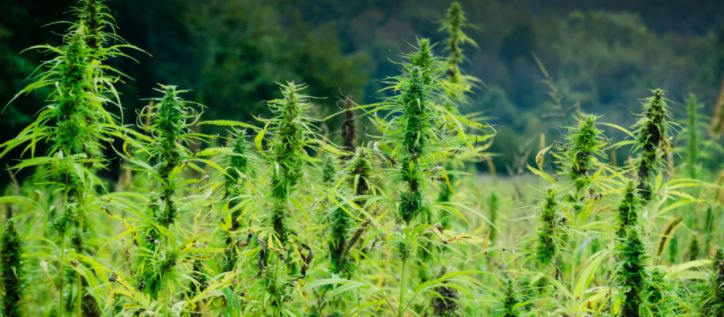
 There is talk about converting 400-500 acres in the Smith River region into growing hemp. Who owns this land? Does it make economic sense? How much water will it take? Could this be more profitable than growing Easter lily bulbs for example? Will the Westbrooks, the Crocketts and other lily growers be digging up their Easter lily bulb fields? Will it take less or more water usage, less or more pesticide, or create an odor that some may enjoy while driving through while others may hate.
Last November, voters passed Proposition 64 which legalized recreational marijuana. But, there was a little-noticed provision in one part of the proposition — a provision allowing for the production of industrial hemp.
Is there a market for hemp?
Currently the market is considered relatively small – $600 million nationally. One of the larger suppliers of hemp fiber products in located in Long Beach. Some of you may even remember rope made out of hemp. There are other products using hemp; clothing, cars, (yes, a Canadian company has even built a car out of hemp), papers, lotions, medicines to even construction materials such as strengtheners for concrete and the automotive industry in things like door panels.
But one of the biggest markets suggested by Jesse Davis during one of the 6 am Town Hall Meetings held at Fisherman’s Restaurant is for CBD, short for cannabidiol-based derivatives. CBD has been used as a treatment for juvenile epilepsy. Predictions are that this will become a multi-billion industry within the next 3 years.
Why did hemp production stop?
During Colonial times until World War II, hemp was an important crop. Then, in 1937 the Marijuana Tax Act was passed by the Federal government and some think this is what crippled the industry. But that’s not totally accurate. The thing that crippled the hemp industry was the availability of cheap synthetic fibers.
But let’s backtrack because politics certainly had it’s hand in ruining the hemp industry. First, look at Andrew Mellon who became President Hoover’s Secretary of the Treasury and Dupont’s primary investor. He appointed his future nephew-in-law, Harry J. Anslinger, to head the Federal Bureau of Narcotics and Dangerous Drugs.
That’s called NEPOTISM; something even Del Norter’s can associate with.
During the 1920’s and 1930’s, a campaign was started to sway public opinion against “marihuana” which lumped HEMP in with the drug, and thus created the public’s perception that hemp should be banned by Congress because it was said to be a violent and dangerous drug. This was false information, just in case you were wondering.
Now, who produced cheap, synthetic fibers? DUPONT. Wasn’t it Sir William Schwenck Gilbert (of Gilbert & Sullivan fame) that said, “love makes the world go ’round?” I beg to differ. Money (or love of money) and politics makes the world go ’round.
Another big reason hemp was banned was because it was a serious threat to many of the big industries out there. At the time it was mainly plastics, oil and paper.
What are the benefits of growing hemp and should Del Norte County get into the hemp production business?
If we compare growing hemp to growing cotton, there are several advantages to going with hemp. It takes less land and 50% less water. When it comes to processing, cotton uses four times as much water than hemp. But, Del Norte County is not known for growing cotton. It has about 600 acres of perennial Easter lily bulbs under production and the cost analysis by those growers comparing the benefits or draw backs of switching to hemp would make the most sense. But for me, the real kicker that puts it over the goal post is this: while most crops require the use of pesticides in order to survive and thrive, hemp, or Cannabis sativa, is considered rare because it doesn’t. That means that the Smith River could once again become pristine because currently, every year, Easter lily growers apply 300,000 pounds of highly toxic pesticides to their crops which contaminates the Smith River.
Some thought that the subject of hemp production would be discussed at the October 30th meeting held at the Flynn Center concerning cannabis. Didn’t happen. The medical/recreational usage of marijuana was the main topic of discussion. The hemp discussion was deferred for now.


Leave a Reply